
 Yaron Yadan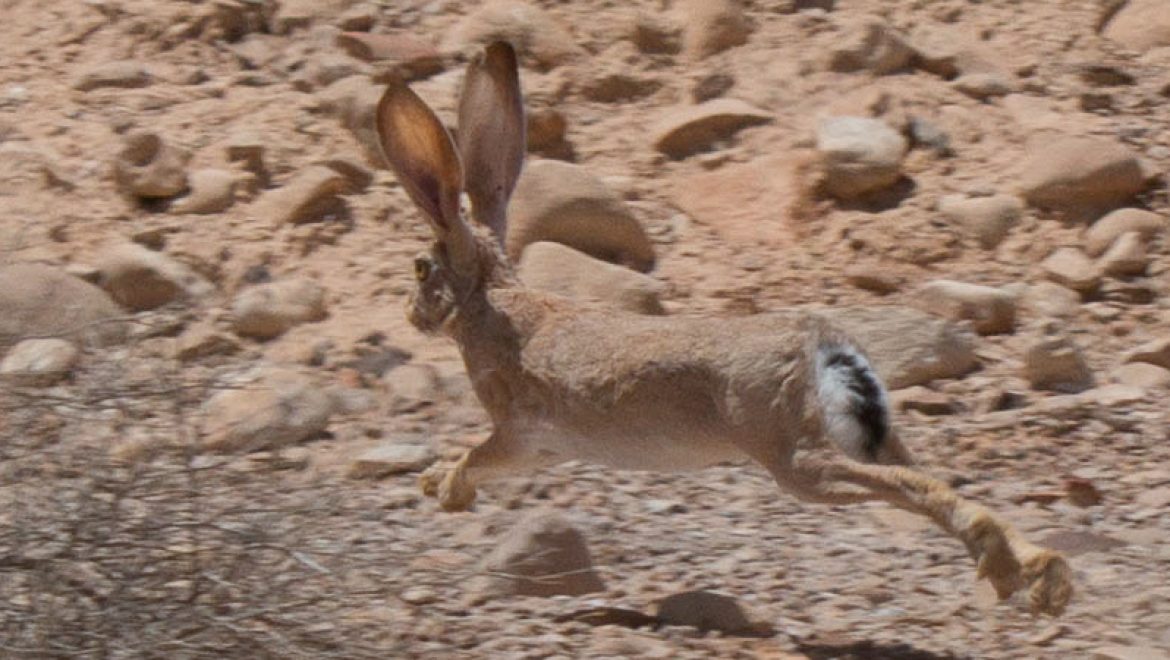
In which he who plants his stake
in the truths—
Curiosity, study,
honest thought—
will understand that the truth
is rooted in reality;
this is the secret of wisdom
and this its source
Volume Three
Please safeguard the sanctity of this page
Second Edition
Nissan, 5759
“Rabbi Akiva said, ‘and was Moshe Rabbeynu a hunter or a bowsman? From here we have an answer to those who say that Torah is not from the heavens’.” (Sifrei, Devarim, Parshat Re’eh, passage 49, also Hulin 60b, about a shesu’a).
The “Chazon Ish” OBM said: “It is one of the foundations of faith that all that was said by Chazal, whether in Mishna or Gemara, in halacha or aggadah, are the words revealed to us through prophetic powers, the power of the influenced mind touching the mind in our body” (Letters of the Chazon Ish, 15).
And Rabbi Bloch, head of the Telz Yeshiva, author of the “Shiurei Daat,” further stated, according to Rabbi Chaim of Volozhin (about what he wrote in “Nefesh HaChaim”), that: “From the day the Torah was given to Israel, the Torah was given to the sages to decide its laws; according to them would be the ways of the world and the laws of creation, etc.” (Shiurei Daat, Chapter 1, pg 25).
We have shown and also proven, in volume 1 and volume 2, that the knowledge of Chazal was only commensurate with the knowledge of those generations and the holy spirit and prophecy did not assist them at all, that they erred on simple matters. Now in volume 3 we will, with G-d’s help, examine the words of Rabbi Akiva and see what Moshe was and what he was not. We will also see what Moshe knew and what Chazal knew.
The words of Rabbi Akiva relate to four animals forbidden by the Torah, and they are none other than the camel and the pig, the shafan and thearnevet[1], each of whom have one sign of ritual purity. Chazal determined that they and only they have one sign of ritual purity, and all other animals in the world either have no signs of ritual purity at all and are forbidden or have two signs of ritual purity and are permitted. And Chazal ask: Moshe Rabbeynu OBM, when he wrote the Torah, how did he know this? And was he a hunter or a bowsman who knew all the animals in the world? But the Holy One, blessed be He, who alone knows all the animals in the world, revealed to Moshe the issue of the four animals at the time of the Receiving of the Torah and its writing at Sinai. And this is why Rabbi Akiva said that here is an answer to those who say that Torah is not from the Heavens.
I will admit and I will not be ashamed that awe and fear gripped me as I approached that which is holy, but it is Torah and it must be studied, and G-d’s seal is truth. And behold, two of the four animals are the shafan and thearnevet. And this is what the holy Torah said on the matter: “And the shafan, for it chews its cud and has no split hooves, it is impure for you. And the arnevet, for it chews its cud and has no split hooves, it is impure for you” (Leviticus 11:5).
And the words are startling and astonishing, for the hare and hyrax do not chew their cud at all!
And this is what Moshe Rabbeynu wrote according to G-d’s word?! A mistake, G-d forbid?! A mistake in our holy Torah?! May the Heavens quake and the earth shake. We will believe with complete faith that the word of our G-d is always true. But if so, the mistake does not originate with the Divine who dictated the Torah, but with the copyist. And he who is most wise will be amazed.
And it is so, wise people were amazed and sages were gripped with silence; they did not approach this difficult matter until the most recent generations. Only when the matter became a public issue were the sages forced to try and explain it.
Rabbi Samson Raphael Hirsch wrote in his commentary that theshafan and the arnevet of the Torah are a different species than the ones known to us today. Who are and what are the “Biblical” cud-chewing shafan andarnevet? When did they disappear and why? How did it happen that they were switched in the tradition and in the knowledge of the sages? About all of these Rabbi Hirsch remains silent and does not explain.
In general, his words are most puzzling. After all, the shafan and thearnevet are animals found in every country in which Jews have lived from ancient times onward (unlike the camel, which is not found in Europe, yet its identity was kept intact) and the tradition about these animals is easy to hand from rabbi to student. How is it that suddenly these animals were replaced in all lands in which Jews had lived; the “cud-chewers” suddenly disappeared and new animals came in to replace them?
It is also puzzling that until Rabbi Samson Raphael Hirsch there was no doubt at all about the identity of the shafan and the arnevet. And to strengthen [that point] we will bring the words of the “Magid Mishneh” (Rabbi Vidal Yom Tov Di Tolosha) in the forbidden foods, chapter 1, halacha B: “the shafan and the arnevet are cud-chewers and do not have split hooves and it is known that they have teeth in their upper cheek.”
From this we know that the “Magid Mishneh,” who lived 500 years ago, had no doubt in his mind about the identity of the shafan and the arnevet, and according to this ruled halacha. And there is no need to say that Rashi and the Rambam, who lived before him, knew these animals and identified them (see Rashi on Megillah 9b).
But the clearest proof of all is from the words of the Gemara itself(Megillah 9b) in talking about the Septuagint. It says that they wrote “young of legs” in place of “arnevet” since the wife (in the Yerushalmi it says mother, and in manuscripts, sometimes it says father) of Ptolmey, king of Egypt, was “Arnevet” and they feared the king’s anger. And we well know that Ptolmey’s father was named Lagus, and in Greek the hare is called, to this very day,Lagos! And it is clear to any beginning student that today’s hare is the arnevetof the Septuagint, of the Talmud and the Torah.
Is it because R’ Samson Raphael Hirsch had difficulties with the matter of chewing the cud that he changed the transmission of tradition from generation to generation?
R’ Samson Raphael Hirsch’s words are untenable not only to us, but also to the author of the Responsa “Sridei Aish.”
In the Responsa “Sridei Aish,” part 2, section 4, he brings some answers of this sort and does not accept them. Finally, he gave this excuse: It is true; the hare does not chew its cud “but she moves her jaw similar to the manner of ruminants and therefore it looks as though she chews her cud. The Torah wanted to prevent mistakes, because one could be mistaken and think the animal kosher; it is the same with the hyrax,” end of quote.
And we stand amazed. This is the excuse of a Torah great? “One could be mistaken and think the animal kosher”? How? The hyrax and the hareare forbidden according to the Torah, as they have no split hooves so how could one make a mistake and think them kosher animals?
And not only is this a poor excuse, but for it the “Sridei Aish” turned the plain meaning of the Torah on its head! “It looks as though she chews her cud” means “does not chew its cud.” According to the “Sridei Aish,” what is said in the Torah about these two animals, that they chew their cud, is not true!
When the Torah greats failed to explain the grave factual error in the words of the Torah, the scholars attempted to find excuses. They did not rest until they checked the zoology textbooks; perhaps their salvation would lie there. They did well in going to the scientists, for there will be found the truth without fear or favoritism, and so is worthy for anyone seeking knowledge and wisdom. The answer to the Torah’s mistake was not found there, but they did find in those books an odd habit of the hare—sometimes she eats her own droppings. What connection does eating of dropping have to this? Since the ones seeking an excuse found no other explanation for the arnevet which does not chew its cud, they decided that eating droppings is the rumination of the hare!
And they were not embarrassed to teach this nonsense to their students as an explanation. Not only did they change “leaving droppings” into “chewing its cud” and made the words a bandage, but it did not bother these scholars to thus negate the words of the great Rishonim. For this is what the greatest of the Rishonim said about the chewing of cud: Rashi, Leviticus chapter 11, verse 3 “Chews its cud—regurgitates and vomits the food from its guts and returns it to its mouth,” this exactly! And the Ibn Ezra on the same verse says: “ma’alat gera—[a word] derived from garon [throat]” and the Rashbam, in that same place: “chews its cud—brings back its food up the windpipe after eating it” and all the commentaries, the great ones of the Rishonim, agree. And do the “scholars” think that the hare leaves droppings through its throat? How dare they, for the sake of an excuse, negate all the words of the Rishonim, G-d forbid? But the Rishonim were correct in describing the reality of chewing the cud and were precise in their words. The hare does not chew its cud, as it does not bring the food from its guts through its throat to its mouth, as described by Rashi and all the Rishonim.
But even if there were something behind the explanation for the hare,what of the hyrax? About it, too, it is said that it chews its cud, and it never did. The hyrax doesn’t even eat its droppings. What will be the scholar’s excuse? Perhaps they will say that shafan [shin-fey-nun] is the letters of nefesh [nun-fey-shin], and therefore it chews its “spiritual cud” which can not be seen by the physical eye…how much longer will they follow such nonsense?
We should admit the truth: Neither the hyrax nor the hare chews its cud.
What follows from all our words is that Moshe Rabbeynu was not a hunter nor a bowsman, and also did not understand animals and if there is a mistake in our Holy Torah it did not, G-d forbid, come from the Holy Spirit, because G-d will never err, but he wrote it on his own accord. And you, the wise reader, will know if “here is an answer to those who say that the Torah is not from the Heavens,” as Rabbi Akiva said, or whether the exact opposite is true. And he who understands will understand.
We have seen Moshe Rabbeynu’s understanding of animals and as is our way in holy matters we will bring additional examples from the Gemara which reveal the span of Chazal’s knowledge in zoology. In Bechorot page 8a the Sages detailed the gestation period of animals.
“The wolf, lion, bear, tiger, panther, elephant, monkey, and small monkey for three years.”
This is not true. For almost 200 years we have been researching ways of animals and the facts are clear and bright: the gestation period of lions is 3.5 months, of bears up to 8 months, of tigers up to 4 months, of elephants up to 24 months, and of the monkey up to 8 months. And should we use, here too, the method of Rabbi Samson Raphael Hirsch—the lion is not the same lion and the elephant not the same elephant—every thinking person would laugh. And are these words of Chazal “things revealed to us through prophetic powers, the power of the influenced mind touching the mind in our body” as said the Chazon Ish above? This sort of mistakes about matters of simple reality?
In order to give more support to our stand we will conclude with the matter of the snake, who has mislead us from Creation and even managed to trick Chazal (in Bechorot 8a) into saying that the snake’s gestational period is seven years. It is said, “Cursed are you above all livestock and all animals,” and Chazal interpreted this [to mean] that as the livestock (the donkey) gestates seven times longer than the animal (the cat, and some say the dog), so the snake gestates seven times longer than the livestock. The donkey gestates one year, and so the snake gestates seven years.
Go and see the wisdom of Chazal, to know the gestation period of all the world’s snakes without allowing reality to disturb them at all. Why should they bother with examination, knowledge, observation, and conclusion? They have Torah verses in their hands, and according to the Torah verses they will determine the gestation period!
Woe is us who have been broken! This never has been. Most of the snakes lay eggs, and the time from fertilization to hatching is between two and 14 months (according to type of snake). Viviparous snakes gestate up to one year and generally only three months. Every third grade textbook includes these facts in detail.
Is it possible that the Tanaim and Amoraim upon whose words the Divine Spirit rests erred? G-d forbid we say about the words of the Divine Spirit that there is even the slightest shadow of a doubt. But if so, then the Sages did not speak from the knowledge of the Divine Spirit when they erred, but from their own knowledge alone!
About these sorts of things did the mockers of the generation say that the Sages had not erred, the snakes erred… and not only that, but the snakes persist in their error, rebelling and refusing to extend their gestational period for another few years…
Woe to the author of “Shiurei Daat” and woe to his words, which we brought above, that “the Torah was given to the sages to decide its laws and according to them would be the ways of the world” etc. and woe, that even the snake who crawls on his belly does not accept the Sages’ determination and acts based on simple reality and not according to their Torah-based determinations.
We brought, in Pamphlet no. 1, the words of the Rambam (Moreh Nevuchim, part 3, chapter 14) that science was lacking and Chazal spoke only with the knowledge of those generations. In Pamphlet no. 2 we brought the words of the “Yad Yehuda” in the laws of treifot, chapter 40, that Chazal were not full experts in some matters. We will bring here the words of the son of the Rambam (in the introduction to the book “Ein Yaakov”) to fulfill the verse that a matter will stand on the testimony of two or three witnesses. And this is what Rabbi Avraham, son of the Rambam wrote: “Know that you must know: anyone who wants to support some opinion, to favor the one who said it and accept his judgment without scrutiny and understanding to see if the matter is true or not—this is one of the bad ideas and is forbidden from the ways of Torah and the ways of intellect, etc. since we find them (Chazal) saying [things] untrue and nonexistent in the Gemara, matters of medicine and things like the even tkuma which they say prevents miscarriages and is untrue, etc. It has become clear to us that scholars do not bring opinions and express them except based on their truth and their proofs, and not based on who said them, be he who he may be,” end of his wonderful words.
Who is wise? Anyone who looks at things based on true reality and based on evidence and proofs, examination and testing, assessing and demanding, through to a conclusion. Only thus, from reality, will come deduction (theory) and not the opposite. And the wise one will check for himself, with his own intellect, and will decide for himself what is true.
In this pamphlet, too, we will say a bit as a side-note.
First, this pamphlet, as its predecessors, appears in its third printing, revised and amended. For those who have requested this pamphlet and its predecessors have multiplied. And meanwhile, the fourth and fifth pamphlets have been published and distributed, and in them there are words of truth and knowledge about the issues of zmanim and the motion of the sun in the heavens and also the matter of the renewal of the moon and the secrets ofibur (intercalation). Amazing things about additional great mistakes made by Chazal about reality, how the great men of the Gentiles preceded them in matters of truth and reality, and how the knowledge of idolaters became the Torah of Israel through the commandment of the honorable Rabbi Chaim Kannevsky.
Second, we are going from strength to strength and have, at a fortuitous hour, obtained an e-mail address and will answer all correspondents, each according to his ways, swiftly and without revealing any identifying detail of those who desire anonymity. As is known, none who correspond this way need identify himself and everything is strictly and completely confidential.
And you who thirst for words of truth, if you have thoughts and ideas or questions or disagreements with what we have written in these pamphlets, please write to us at the post office box which appears here or to the e-mail address, and we promise, on our honor, to maintain the confidentiality of those who write and what they write. We also promise to give a full and correct answer to all correspondents, so as to be pleasing to the listener and the speaker.
We still have a very small number of the first and second pamphlets and an adequate supply of the fourth and fifth pamphlets, which will be willingly sent free of charge to anyone who requests it through our post office box. First come, first served.